

%402x.svg)
What Makes a Villa in Lombok Profitable? Rental Performance Guide
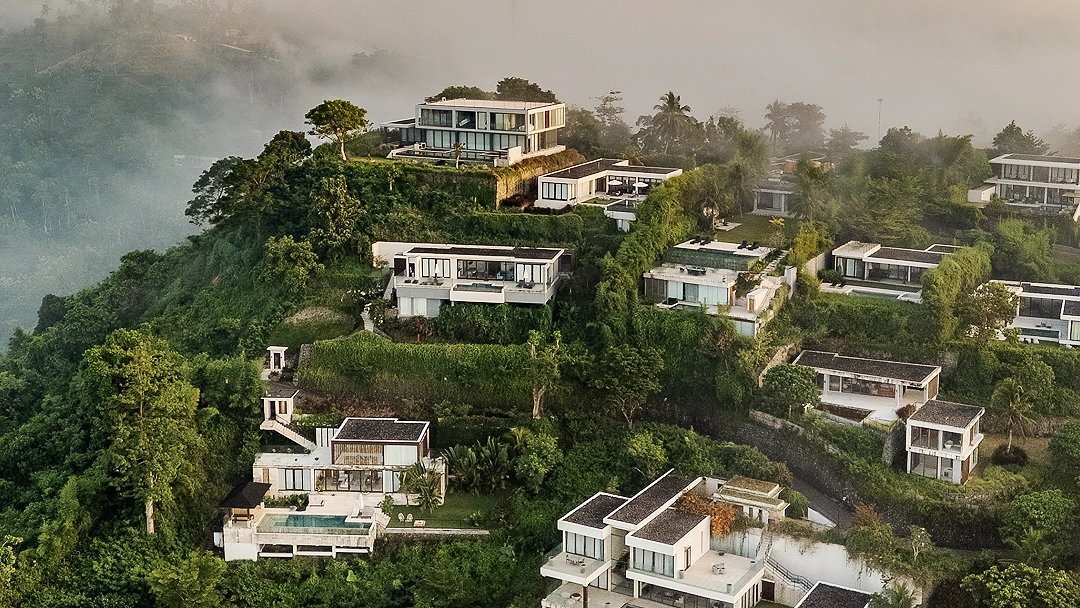
The performance gap between the best and worst-performing villas in South Lombok is not narrow. A well-positioned, well-designed, professionally managed villa with strong amenity and a review record built over time can achieve 65-75% annual occupancy with a premium ADR. A poorly positioned, self-managed villa with weak photography and no management infrastructure can struggle to reach 40% at any rate.
Both might be within five minutes of each other on the same hillside. The difference is not luck. It is a set of identifiable, manageable factors.
This guide breaks down the eight most important drivers of rental performance for villas in Selong Belanak - the factors we have observed consistently across the market and within Selong Selo's own portfolio.
1. Position and Views: The Factor You Cannot Retrofit
Of all the variables that determine a villa's rental performance, position and views correlate most strongly with average daily rate. A villa with a genuine panoramic ocean view commands a premium over a comparable villa without one - typically 30-50% more in ADR, regardless of other quality factors. This is consistent across markets, not specific to South Lombok.
Hillside positions above Selong Belanak Bay deliver what the best villa positions everywhere deliver: an orientation that puts the landscape in front of you, not behind you. Panoramic bay views, headland views to both sides, and afternoon light falling across open water - these are not details. They are the product.
Beach proximity matters in a different way. Villas within 7-10 minutes by vehicle of Selong Belanak Beach consistently outperform those further out for occupancy, because guests in this market place genuine value on beach access in daily life. This factor compounds with views: the best-positioned villas have both.
'Shadow positions' - villas tucked behind ridges, with limited outlook, or with no direct ocean view - are the most consistent predictor of underperformance. No amount of interior quality, photography, or pricing strategy fully compensates for a position that cannot deliver the view that guests in this market are booking for.
2. Design That Serves Guest Experience, Not Just Architecture
The distinction between designing a villa for personal comfort and designing it for guest experience matters more than most first-time villa buyers realise. The two are usually aligned, but the specific design choices that drive rental performance are worth understanding before the plans are drawn.
Outdoor living space is the most consistent differentiator in guest reviews from the Selong Belanak area. Guests who travel to South Lombok spend most of their waking hours outdoors. A generous pool deck, shaded daybeds, outdoor dining, an outdoor shower, and good sightlines from the pool to the view consistently rank among the highest-valued aspects in five-star reviews. Indoor rooms matter - the bedroom, the bathroom - but they rarely generate the reviews that drive future bookings. The pool deck does.
Indoor-outdoor integration: Lombok's tropical modern architecture at its best creates spaces where the distinction between inside and outside is deliberately blurred. Sliding glass walls that open entire rooms to the terrace, living spaces that flow directly to pool and view, and natural ventilation designed into the structure all contribute to the 'atmosphere' review category that separates 4.8-star properties from 4.5-star ones.
The private pool is non-negotiable at the premium positioning that Selong Belanak commands. A plunge pool is acceptable for compact one-bedroom suites. A genuine pool - large enough for a family to actually swim in - adds meaningfully to ADR for two and three-bedroom properties.
Common design errors that hurt rental performance: insufficient outdoor space relative to indoor footprint; single-aspect layouts with limited view exposure; poor natural ventilation (compensated by excessive, noisy air conditioning that guests notice and mention); and kitchens equipped for decoration rather than actual use by self-catering guests.
3. Professional Management: The Largest Single Performance Lever
Self-management can work. For owners who are genuinely engaged - technically capable of managing multi-platform listings, responsive to guest enquiries at any hour, skilled at dynamic pricing, and prepared to coordinate cleaning and maintenance remotely - self-management produces reasonable results.
For most international investors, professional management outperforms self-management on every metric that matters: occupancy, average daily rate, review scores, and net income after the time cost of self-management is honestly accounted for.
What professional management actually involves: multi-platform listing optimisation across Airbnb, Booking.com, and villa specialist platforms; dynamic pricing that responds to real-time demand signals (competitor availability, local events, seasonal patterns, conversion rate); professional photography and listing copy; guest communication from enquiry through post-departure; cleaning coordination and quality control; maintenance oversight and vendor management; key handovers; and review management.
The management fee - typically 15-25% of gross rental revenue - is the most common objection raised by new owners. The countervailing reality is consistent: professionally managed properties generate more gross revenue than self-managed equivalents, making the net comparable or better. A property generating 65% occupancy at $250 ADR with professional management produces more net income than a property at 45% occupancy at $220 ADR managed by its owner, even after the management fee.
The quality range among management operators in South Lombok is significant. There is a substantial difference between a well-resourced operator managing a curated portfolio within a single resort ecosystem and a small local agency managing 20 diverse properties across multiple areas. The former brings pricing data, operational standards, and guest service infrastructure that the latter cannot replicate.
4. Photography and Listing Quality: The Most Undervalued Investment
The decision to book a villa in South Lombok is made by someone sitting at a laptop or phone, comparing images. Everything else - the view, the design, the pool - exists in the guest's imagination until they arrive. Great photography is what makes a property's qualities visible to that person at that moment.
Professional villa photography, executed by a specialist who understands light, angle, and the specific visual language of luxury tropical accommodation, pays back its cost within weeks of improved booking conversion rates. The typical investment - USD $800-2,000 for a full shoot - is one of the highest-ROI expenditures a villa owner can make.
What great photography captures: the view at golden hour, outdoor living at its most appealing, the pool with sky reflection and mountain backdrop, the bedroom with natural light, the bathroom in a way that reads as spacious, and at least two or three lifestyle images that show the villa as it would be experienced. What it avoids: dark interiors, overcast exterior shots, empty pools, and the distorted wide-angle images that make rooms look large and fake.
Listing copy completes the work photography starts. A great description answers the guest's questions before they are asked - where the villa is, what it looks like at sunset, how far the beach is, what is included, and what it feels like to be there.
5. Dynamic Pricing and Platform Strategy
Setting a nightly rate and leaving it unchanged is the single most common pricing mistake among self-managed villas. Dynamic pricing - adjusting rates in response to real-time demand signals - is what separates high-performing revenue management from static rate setting.
South Lombok's seasonality is consistent: peak occupancy in July-August (school holidays across Australia, Europe, and Southeast Asia) and December-January (year-end holidays). Shoulder seasons - April-June and September-October - require disciplined rate management to maintain occupancy without sacrificing ADR. Low season (February-March) rewards flexible minimum stay policies and targeted promotions.
Specific events drive discrete demand spikes: the MotoGP Mandalika round in late September/early October has become a reliable annual occupancy spike. Indonesian national holidays, particularly the Eid periods, create strong domestic and regional demand. Operators who plan for these events - and price into them 6-8 months in advance - capture premium rates that late-moving owners miss.
Platform strategy: Airbnb and Booking.com deliver the majority of booking volume in this market. But villa specialist platforms - those serving the premium short-stay market - deliver guests with higher ADR tolerance, longer average stays, and lower review sensitivity. A multi-platform strategy maximises both volume and quality.
6. Guest Amenity and the Experience That Drives Reviews
In the review economy, every guest stay produces permanent public data. A guest who leaves a 4-star review citing 'noise from the road at night' or 'pool was not cleaned on arrival' is not just describing their experience - they are influencing every future booking decision made by someone who reads that review. Review quality compounds over time and is one of the most durable performance assets a villa can build.
The amenities that Selong Belanak guests consistently value: a pool that is serviced daily, air conditioning that functions reliably, strong WiFi (not aspirational WiFi - functional WiFi that works throughout the villa), a kitchen equipped for actual self-catering, and a welcome experience that makes arrival feel considered rather than administrative.
Concierge services have a disproportionate impact on review quality relative to their cost. Private driver bookings, surf lesson coordination, Gili Island day trips, and in-villa dinner preparation generate both practical guest satisfaction and review mentions that read as genuine hospitality rather than standard accommodation.
The Aura Restaurant and Senja Wellness Sanctuary at Selong Selo transform this equation for owners within the resort. Guests are not reviewing a villa - they are reviewing a resort experience where food, wellness, and concierge services are integrated into the stay. The review becomes a composite of all of these, which is fundamentally different from a standalone villa review.
7. Review Strategy: Building the Asset That Compounds
The review record a villa builds over its first two years is one of the most valuable and durable competitive assets it will ever possess. A villa with 60+ reviews averaging 4.8 stars has an algorithmic and psychological advantage over a newer property that cannot be overcome by price or photography alone.
On Airbnb specifically, 50 reviews is approximately the threshold at which algorithmic promotion in search results becomes significantly more favourable. A well-managed villa with a disciplined guest communication and review strategy can reach this milestone in 12-18 months from launch.
The timing and warmth of review requests matters significantly: a personalised, well-timed message 24 hours after checkout drives review completion rates measurably above the platform's default prompts. Operators who systemise this step consistently build review records faster than those who leave it to chance.
How you respond to negative reviews matters as much as the reviews themselves. A calm, professional, solution-oriented response to a critical review recovers more trust among prospective guests who read it than leaving it unanswered. The response is the operator's opportunity to demonstrate how the property is actually run.
8. The Resort Ecosystem: The Factor That Cannot Be Faked
A standalone villa, however well-designed and managed, is a single product. A villa within an established, operating resort ecosystem is something different - an experience that guests book partly for what they see in the photographs, and partly for the confidence that a resort brand provides.
The Selong Selo ecosystem includes: the Aura Restaurant and bar with its farm-to-table menu and infinity pool views; the Senja Wellness Sanctuary offering spa, yoga, and fitness facilities; Club Coconut Kids Club; resort-wide concierge, housekeeping, and security services; and a property management infrastructure that has been operational and refined over fifteen years.
The performance effect of this ecosystem is consistent and observable. Resort-branded managed villas within Selong Selo achieve occupancy rates that outperform comparable standalone villas by 15-25% at equivalent ADR. The mechanism is straightforward: guests booking within the resort brand have higher baseline confidence, stay longer, experience a higher standard of hospitality, and leave more satisfied reviews. Those reviews attract more bookings. The loop compounds.
There is no shortcut to building this ecosystem from scratch. It requires years of operational investment, a consistent guest experience standard, and a critical mass of services that individually add value and collectively create something categorically different from a villa sitting by itself on a hillside.
For investors evaluating villa options in South Lombok, the presence or absence of a functioning resort ecosystem around the property is the factor most worth examining — because it is the one factor that most directly determines long-term performance and cannot be added after the fact.
Frequently Asked Questions
Q: What occupancy rate should I realistically target for a Selong Belanak villa?
A: A well-positioned, well-managed villa within the Selong Selo resort ecosystem can realistically target 55-75% annual occupancy. The range reflects differences in villa position, design quality, management effectiveness, and how long the review record has been building. Model conservatively and allow 12-18 months to reach full performance.
Q: Is it worth paying for professional management if I can manage it myself?
A: For owners based in Australia, Singapore, or Europe, self-management at a professional standard requires significant ongoing time commitment and technical capability. Most international owners who attempt it honestly discover that the net income difference does not justify the time cost. The better question is whether the management operator you are considering has demonstrated capability - ask for occupancy data across their existing portfolio.
Q: How quickly does a new villa build a review record?
A: With disciplined management and a well-executed launch strategy, a new villa can accumulate 30-50 reviews in its first 12 months. The key variables are management quality, booking volume in the first quarter, and how proactively reviews are requested.
Q: Does villa size or number of bedrooms have a significant impact on yield?
A: Yes, but not uniformly. Larger villas command higher absolute ADR, but occupancy can be lower (fewer guests qualify for a 4-bedroom than a 1-bedroom). Yield percentage is often comparable or slightly lower for larger villas. One and two-bedroom properties in the Selong Belanak market tend to achieve the most consistent yield percentages due to a wider bookable guest pool.
Read Our Next Article
Investing in Selong Belanak: The Definitive 2026 Guide

Mandalika & Lombok’s Infrastructure Boom: What It Means for Property Investors

Why Invest in Indonesia? The Complete Case for Property Investors in 2026

Curating exceptional ownership opportunities across South Lombok, from turnkey villas to premium ocean-view land investments.


