

%402x.svg)
True Cost of Buying Property in Selong Belanak: Budget Guide

The price you negotiate is the beginning of the cost conversation, not the end of it. Property transactions in Indonesia, like transactions everywhere, carry acquisition taxes, legal fees, and ongoing holding costs that buyers need to model accurately before committing.
We are publishing this guide because we believe total transparency is the baseline that buyers deserve. The full cost picture for South Lombok property is not as daunting as some buyers fear - Indonesia's holding costs are genuinely low by international comparison - but understanding it from the start produces better investment decisions.
This guide walks through every cost from initial purchase through to year five of ownership, including a worked example so you can map it to your specific situation.
Important note: Tax laws and rates can change. Always confirm current rates with a qualified Indonesian tax and legal advisor before executing any transaction. This guide is accurate to the best of our knowledge as of mid-2026, but should not be treated as formal tax or legal advice.
Part 1: Acquisition Costs - What You Pay at Purchase
The costs at purchase depend significantly on ownership structure. Leasehold and PT PMA/HGB transactions have meaningfully different cost profiles.
For a Leasehold (Hak Sewa) transaction: The most cost-efficient structure for foreign buyers at the point of acquisition. Leasehold is a contractual arrangement rather than a formal land right transfer, which means the 5% BPHTB acquisition tax that applies to title transfers typically does not apply. This is a material cost saving. Buyers should confirm the specific treatment with their legal advisor, as transaction structure details can affect this.
Leasehold acquisition costs breakdown: Notary and PPAT fees: 0.5-1% of transaction value (covering document preparation, stamp duty, and registration). Independent legal consultant: USD $1,000-3,000 for due diligence, contract review, and transaction management. Translation and apostille for foreign identity documents: USD $200-500. Total above-purchase cost for a standard leasehold transaction: approximately 1.5-4% of the agreed price.
For a PT PMA/HGB transaction: When a foreign investor buys property into a PT PMA company through an HGB title transfer, the full acquisition cost structure applies. BPHTB acquisition tax: 5% of the transaction value (technically, of the NPOP - Nilai Perolehan Objek Pajak - which is the higher of the agreed price or the government's NJOP assessed value). For most above-market transactions, this is effectively 5% of the agreed price.
PT PMA acquisition costs breakdown: BPHTB: 5% of transaction value. On a USD $300,000 property, budget approximately USD $14,500-15,000. Notary and PPAT fees: 0.5-1% of transaction value. Independent legal consultant: USD $1,500-4,000. PT PMA company establishment (if not already set up): USD $2,000-5,000 including BKPM registration and licensing. Total above-purchase cost for a PT PMA/HGB transaction: approximately 8-12% of the agreed price.
VAT (PPN) - the cost that most surprises buyers in 2026: Effective January 2025, Indonesia's VAT rate is 12% and applies to new property purchases from VAT-registered developers. For a USD $300,000 villa purchased from a VAT-registered developer, this adds USD $36,000 to the transaction cost - a very material amount. VAT typically does not apply to secondary market transactions (private individual to private individual resales). The key question is whether your developer or seller is VAT-registered. This must be confirmed before signing, not after. VAT is the line item that most frequently surprises buyers who did not ask the right questions at the beginning.
Seller's PPh (2.5% of transaction value, paid by the seller): This is not a buyer's cost directly, but it affects price negotiations. The seller must pay 2.5% PPh Final on the gross transaction value. In some deals, particularly where the seller is motivated, this cost is borne cleanly by the seller. In others, it becomes part of the price negotiation. Understand who is paying what before you table your offer.
Government stimulus note: Indonesia has periodically introduced temporary BPHTB reductions or exemptions as part of property sector stimulus packages. These are time-limited and subject to revision. Always check whether any current stimulus applies to your specific transaction.
Part 2: Annual Holding Costs - What You Pay Every Year
Once you own the property, these are the recurring costs. The overall picture is more favourable than most buyers from high-tax jurisdictions expect.
PBB (Pajak Bumi dan Bangunan - Land and Building Tax): Indonesia's annual property tax is calculated at 0.1-0.5% of the NJOP (government assessed value). The NJOP is typically significantly below market value. For a villa with a market value of USD $300,000, the NJOP might be assessed at USD $50,000-120,000. Annual PBB is therefore typically in the range of USD $50-600 for most villas in the Selong Belanak area. This is not a typo. Annual property tax in Indonesia is genuinely minimal compared to equivalent taxes in Australia, the UK, or the US.
Resort and community fees: If your property is within a managed resort or community development, annual fees cover maintenance, security, common area upkeep, and infrastructure. At Selong Selo, these fees are incorporated within the management arrangement and disclosed clearly to buyers. Budget USD $2,400-6,000 per year for a well-managed resort villa community fee.
Property insurance: Property and public liability insurance for a villa in this area typically costs USD $500-1,500 per year. This is not optional - it protects against fire, structural damage, and third-party liability from guest injuries or damage. Include it in your cost model from year one.
Maintenance reserve: 1-2% of the villa's replacement construction cost (not market value) annually is the standard provision among experienced operators. For a villa with construction replacement cost of approximately USD $150,000-200,000 (excluding land), this suggests a maintenance reserve of USD $1,500-4,000 per year. Pooling vs spending this reserve annually: some years the maintenance spend is minimal; other years a pool motor replacement or roof repair consumes the reserve and more. The provision smooths this variability.
Tax compliance and annual accounting: If holding through a PT PMA, annual compliance costs - Indonesian tax filings, BKPM reporting, financial statements - with a qualified local accountant or legal firm: USD $500-2,500 per year depending on complexity. For leasehold individual owners, an Indonesian tax advisor for rental income reporting: USD $300-800 per year.
Total annual holding cost (excluding rental management fees): For a leasehold villa within a managed resort: approximately USD $5,000-10,000 per year. For a PT PMA held villa with full compliance: approximately USD $6,500-12,000 per year.
Part 3: Rental Income Costs - What You Pay If You Rent
If your property generates rental income - as the majority of Selong Belanak villa owners intend - these additional costs apply.
Professional management fee: 15-25% of gross rental revenue, covering platform management, pricing, guest communication, cleaning, maintenance coordination, and financial reporting. At Selong Selo, this is a transparent, fixed-percentage arrangement with full financial reporting.
Rental income tax for non-residents: This is where structure selection has the most material financial impact. Foreign individuals without an Indonesian Tax ID (NPWP) face a 20% withholding tax on gross Indonesian-sourced rental income. With an NPWP and under an applicable Double Taxation Agreement - Indonesia has DTAs with Australia, Singapore, the UK, Germany, Japan, and many others - the withholding rate is typically reduced to 10-15%. For PT PMA-held properties operating as commercial rental businesses, corporate income tax at 22% applies to net taxable income (after deductible expenses), which may be more efficient than individual withholding for significant rental operations.
Obtaining an NPWP before your first rental booking is strongly advisable. It reduces your withholding exposure immediately and simplifies ongoing tax compliance. The process is straightforward with a qualified local advisor.
Platform commissions: included in gross revenue calculations. Airbnb charges hosts approximately 3% service fee; Booking.com charges 10-18% commission on bookings made through its platform. Professional management incorporates this into their yield projections - confirm that it is explicitly accounted for in any projection you receive.
Part 4: A Worked Example - Full Five-Year Cost Picture
Here is an illustrative cost model for a USD $300,000 managed leasehold villa in Selong Belanak, purchased from a VAT-registered developer. These figures are for illustration only - actual results depend on the specific property, management quality, exchange rate, tax structure, and market conditions. Always obtain independent financial and tax advice.
Annual income model (60% occupancy, USD $200 average daily rate):
Annual gross revenue: USD $43,800. Less management fee at 20%: USD $8,760. Less rental income tax at 15% (NPWP + DTA): USD $5,256. Net rental income after management and tax: approximately USD $29,784.
Annual holding costs (resort fee, insurance, maintenance, PBB): approximately USD $8,500.
Net annual cash return after all costs: approximately USD $21,284. Yield on purchase price (USD $300,000): approximately 7.1% net.
Across five years at this performance, cumulative net cash return: approximately USD $106,000 - before any capital appreciation on the underlying asset.
These are illustrative figures built on conservative assumptions. Performance varies. The model is provided to show the cost structure, not to make a specific return promise.
Part 5: Exit Costs - What You Pay When You Sell
When you eventually sell your Selong Belanak property, the following costs apply to you as the seller.
PPh Final (seller's income tax on property disposal): 2.5% of the gross sale price. This is the primary exit levy in Indonesia. Without an NPWP, a higher withholding rate may apply. This is a strong reason to register an NPWP well before any anticipated sale - not as a tax avoidance measure, but as a basic tax compliance step.
Agent or broker fees: 3-5% of sale price is typical in this market if selling through an agent or developer network.
Legal transfer costs: approximately 1% of sale price for notary and documentation on the buyer's title.
Total exit cost as seller: approximately 6.5-9% of sale price.
Capital gains consideration: Indonesia does not have a separate capital gains tax (CGT). The 2.5% PPh Final on the gross sale price is the total exit levy on the disposal - not a percentage of the gain. For properties that have appreciated significantly, this is a structurally favourable exit tax compared to CGT regimes in many home countries.
Part 6: How Indonesia Compares to Other Markets
For buyers coming from Australia, the UK, Singapore, or Hong Kong, the cost comparison is instructive.
Annual PBB in Indonesia is genuinely minimal - no comparison to Australian council rates, UK council tax, or US property tax rates, all of which typically run at 0.5-1.5% or more of market value.
Indonesia has no inheritance or estate tax on domestic property assets. This is relevant for buyers thinking about generational asset planning - the absence of estate duty represents real value over long holding periods.
Exit tax at 2.5% (PPh Final on gross sale price) is low compared to long-term capital gains tax in Australia (effective rate of 10-22.5% after the 50% discount), and significantly lower than UK CGT rates on investment property (18-24% depending on rate band).
The material cost to plan around: VAT at 12% on new developer purchases is the line item that most distinguishes Indonesian property from other markets. It does not apply to all transactions - secondary market resales between private individuals typically do not attract VAT - but it applies frequently enough in the primary market that it must be factored into purchase models from the start.
The overall picture: Indonesia is a low annual holding cost environment with a clear and established exit levy. The acquisition cost structure - particularly for leasehold buyers who avoid BPHTB - is competitive internationally. The specific costs that require attention are VAT on new purchases and rental income tax, both of which are manageable with correct structuring.
Frequently Asked Questions
Q: Does BPHTB always apply to foreign buyers?
A: No. BPHTB (the 5% acquisition tax) applies to formal land title transfers - primarily HGB transactions through a PT PMA. Leasehold (Hak Sewa) buyers typically do not pay BPHTB because the transaction is contractual, not a registered title transfer. This is one of the key cost advantages of the leasehold structure. Always confirm the specific treatment with your legal advisor.
Q: Does VAT apply to all new villa purchases?
A: No. VAT at 12% applies to new property purchases from VAT-registered developers. Not all developers are VAT-registered, and secondary market resales between private individuals do not attract VAT. Whether VAT applies to a specific transaction must be confirmed in the due diligence process, before signing - not after.
Q: Is an NPWP essential for foreign property buyers?
A: Strongly advisable. An Indonesian tax ID (NPWP) reduces your withholding tax rate on rental income, enables access to Double Taxation Agreement rates, and simplifies ongoing financial and banking processes in Indonesia. Obtaining an NPWP is a straightforward process with a qualified local advisor and should be done before your first rental booking.
Q: How do I model the currency risk in my investment return?
A: The Indonesian Rupiah has shown periodic volatility against the AUD, SGD, and EUR. Your rental income is earned in IDR (or USD for international bookings) and converted to your home currency. Any yield calculation that does not acknowledge this risk is incomplete. The most practical approach: model your returns in IDR terms and apply a conservative currency assumption for conversions. Your actual return in home currency will vary with exchange rate movements over the holding period.
Q: Are there any annual taxes I might be missing?
A: The main annual obligation is PBB (land and building tax), which is very low. If operating through a PT PMA, annual corporate income tax filing applies. If as an individual, Indonesian rental income reporting. There is no stamp duty (as a recurring cost), no council rates system, and no inheritance tax on domestic property. The annual cost structure in Indonesia is genuinely lean by international standards.
Read Our Next Article

Investing in Selong Belanak: The Definitive 2026 Guide
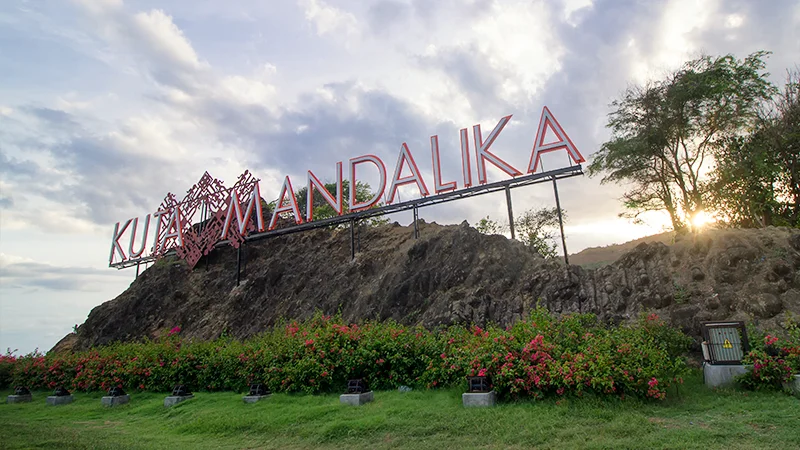
Mandalika & Lombok’s Infrastructure Boom: What It Means for Property Investors
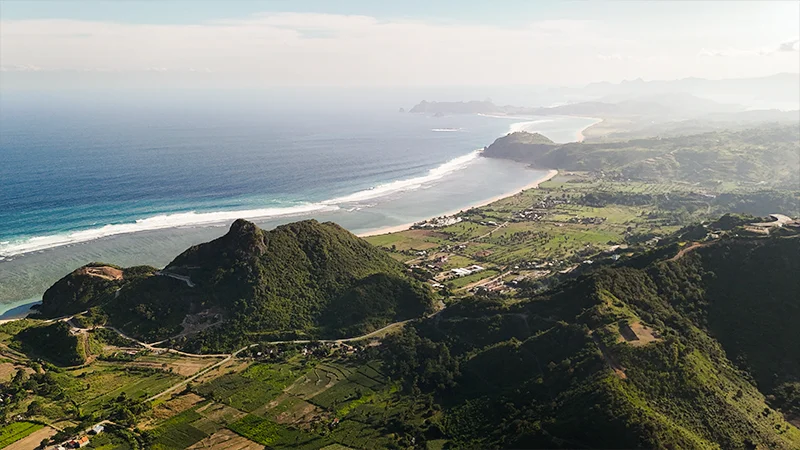
Why Invest in Indonesia? The Complete Case for Property Investors in 2026

Curating exceptional ownership opportunities across South Lombok, from turnkey villas to premium ocean-view land investments.


