

%402x.svg)
Can Foreigners Buy Property in Indonesia? Complete 2026 Guide
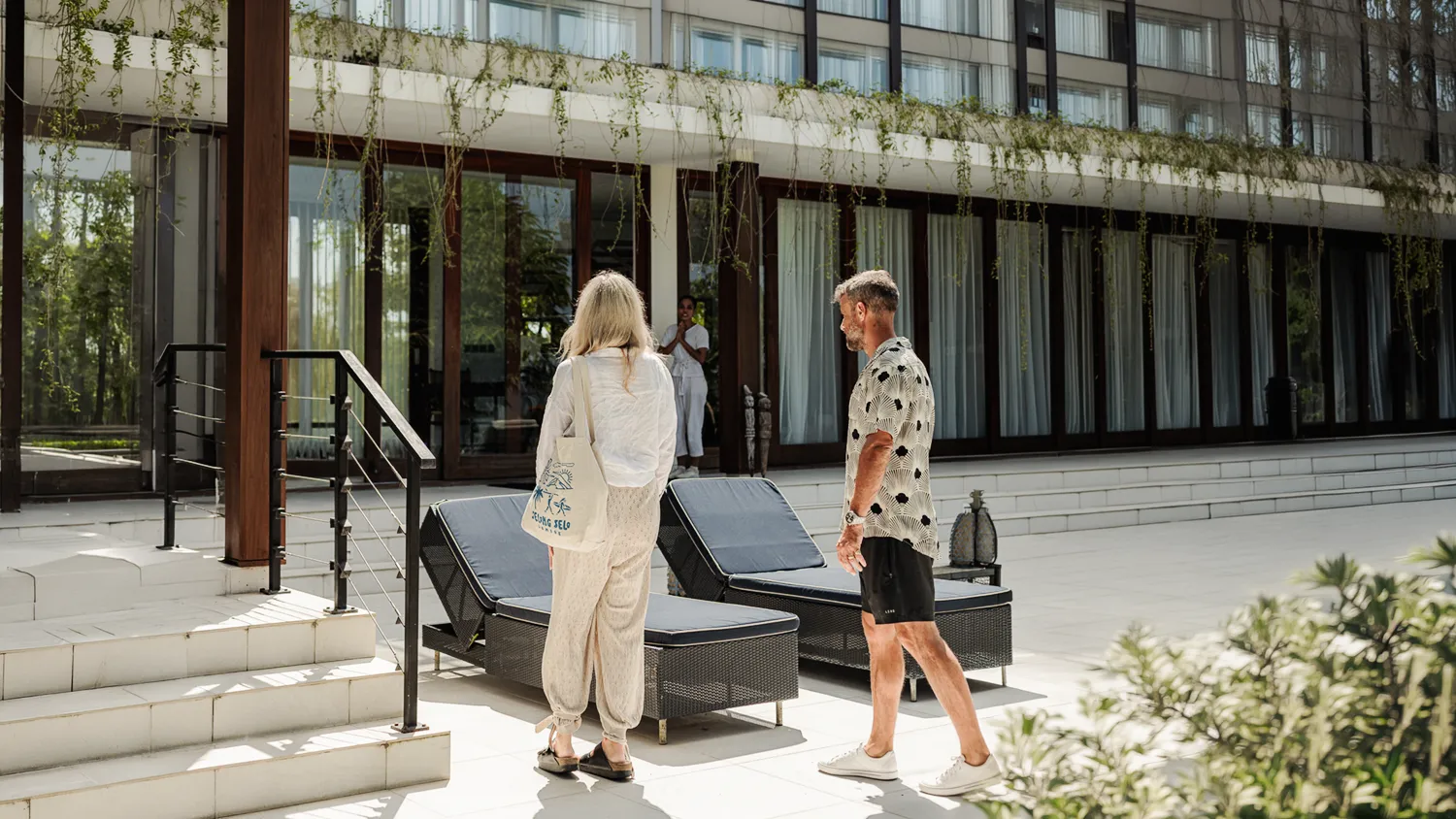
The most common question we receive from international buyers who discover Selong Belanak is some version of the same thing: 'This is extraordinary. But can I actually own something here as a foreigner?'
The answer is yes. The legal framework is established, the ownership structures are well understood by qualified professionals, and buyers from Australia, Singapore, Hong Kong, the UK, Germany, and beyond are actively purchasing property in South Lombok through properly structured transactions every year.
What matters is understanding the two available pathways, and getting the execution right.
The Starting Point: What Indonesian Law Actually Says
Indonesia does not permit foreign individuals to hold Hak Milik (SHM - freehold title) directly. This is the fact that most international investors hear first and sometimes interpret as a 'no.' It is not a no. It is the beginning of a different question: which legally sound structure do you use?
Two fully established pathways exist for foreign property ownership in Indonesia. Both are legally recognised, enforceable in Indonesian courts, and widely used by international investors in established real estate markets including Bali, Lombok, and Jakarta. Neither is a workaround or a legal grey area. They are the framework.
Pathway 1: Leasehold (Hak Sewa)
A leasehold agreement gives a foreign buyer the contractual right to use, occupy, and sublet a property for a defined period - typically 25 to 30 years, with one or more extension options, giving total terms of 50 to 80 years. The underlying freehold title remains with an Indonesian landowner or company, but the buyer's rights over the property are protected by a notarised contract, registered with a licensed PPAT (Notary and Land Deed Official).
What leasehold actually confers: the right to live in the property, rent it to guests, and in well-structured agreements, to pledge it against commercial financing. For buyers primarily motivated by lifestyle use or rental income, this is a complete ownership solution.
What makes a leasehold agreement strong: clearly defined extension rights with pre-agreed pricing or formula; language specifying what happens if the Indonesian underlying landowner transfers the title or dies; no ambiguous clauses about the developer's ongoing role; registration confirmed with the relevant land office. These are not fine print - they are the structural integrity of the ownership.
What to avoid: vague extension terms ('to be negotiated at the time'); agreements drafted by the vendor's notary without independent review; missing registration steps; any agreement where the extension period depends on the goodwill of the Indonesian counterparty rather than contractual obligation.
Cost advantage: Leasehold buyers typically do not pay the 5% BPHTB acquisition tax that applies to formal land right transfers, because a leasehold is a contractual arrangement rather than a registered title transfer. This is a significant cost saving relative to PT PMA/HGB structures. Always confirm the specific treatment with your legal advisor, as transaction structure can affect this.
Best suited to: buyers motivated primarily by lifestyle use, rental income, and ownership simplicity. Buyers who do not need the commercial flexibility of a company structure. Buyers where a 25-80 year horizon satisfies their planning needs.
Pathway 2: PT PMA (Foreign-Owned Company)
A PT PMA (Perseroan Terbatas Penanaman Modal Asing) is a foreign-owned limited liability company registered in Indonesia under the BKPM (Investment Coordinating Board). Once established, a PT PMA can hold HGB (Hak Guna Bangunan - Building Rights) title over land and property.
HGB is a stronger form of title than leasehold. It is a registered land right - the same class of right used by Indonesian companies to hold commercial property. Banks and financial institutions accept HGB-titled land for mortgage and securitisation purposes. Duration: 30 years, extendable for 20 or 30 years at a time, for a total potential tenure of 80 years.
Setting up a PT PMA: the process takes approximately 4-8 weeks with a qualified Indonesian legal firm. Cost: USD $2,000-5,000 for legal registration, BKPM licensing, and company establishment documentation. Once established, the PT PMA requires annual compliance: financial reporting, Indonesian tax filings, and BKPM reporting. Budget USD $500-2,500/year for this with a qualified local accounting and legal firm.
Business licensing: a PT PMA engaged in property rental operations will need an appropriate KBLI (business classification) code for short-term accommodation or property management aligned with its intended operations. A qualified legal advisor can ensure this is correctly configured.
The acquisition tax position for PT PMA: buyers acquiring property into a PT PMA through a formal HGB title transfer do pay BPHTB (5% of the transaction value, above the NPOPTKP regional threshold). For a USD $300,000 property, budget approximately USD $14,500-15,000 in acquisition tax alone. This cost is real and should be included in any investment model.
Best suited to: buyers making substantial investments ($250,000+); buyers planning to operate commercial villa rental businesses; buyers who want stronger long-term legal security through a registered title; buyers already using company structures for tax efficiency in their home country; and buyers who plan to sell within the Indonesian market and want the strongest possible title for resale.
A Third Pathway Worth Knowing: Hak Pakai
Indonesia's PP 18/2021 regulation expanded the right for certain foreign nationals with valid Indonesian residency permits (KITAS or KITAP) to hold Hak Pakai (Right of Use) title on residential property. This is an individual title right, not through a company, but with restrictions: it applies to residential use and typically limits commercial rental operations.
For the typical Selong Belanak buyer whose objective includes rental income, Hak Pakai is usually not the optimal structure. But for buyers who hold Indonesian residency and are primarily focused on owner-occupation with occasional rental, it is worth discussing with a qualified advisor.
Taxes and Costs: What Foreign Buyers Actually Pay
Understanding the full cost picture before signing is essential. Transaction costs vary significantly depending on ownership structure.
- For leasehold transactions: BPHTB acquisition tax is typically not payable (leasehold is contractual, not a title transfer). Notary and PPAT fees: 0.5-1% of transaction value. Independent legal consultant: USD $1,000-3,000. Translation and apostille for foreign identity documents: USD $200-500. Total over-purchase cost: approximately 1.5-4% of the transaction value - meaningfully lower than HGB/PT PMA structures.
- For PT PMA/HGB transactions: BPHTB 5% of acquisition value. Notary and PPAT fees: 0.5-1%. Legal consultant: USD $1,500-4,000. PT PMA establishment (if new): USD $2,000-5,000. Total over-purchase cost: approximately 7-12% of transaction value.
- VAT (PPN) update for 2026: effective January 2025, Indonesia's VAT rate is 12%, and it applies to new property purchases from VAT-registered developers. This is a significant additional cost that many buyers do not initially factor in. VAT typically does not apply to secondary market transactions (private individual to private individual). Always confirm whether VAT applies to a specific transaction before signing - this requires reviewing the developer or seller's tax registration status.
- Annual property tax (PBB): 0.1-0.5% of the NJOP (government assessed value). The NJOP is typically well below market value. For most villas in the Selong Belanak area, annual PBB is in the range of USD $100-500.
- Rental income tax: Foreign investors without an Indonesian Tax ID number (NPWP) face a 20% withholding tax on gross Indonesian-sourced rental income. This rate can be reduced to 10-15% under applicable Double Taxation Agreements (DTAs) - Indonesia has DTAs with Australia, Singapore, the UK, Germany, Japan, and many other countries. Obtaining an NPWP before commencing rental operations is strongly advisable - it reduces your withholding exposure and simplifies ongoing tax compliance.
- Seller's tax on exit: 2.5% PPh Final on the gross sale price, paid by the seller at the time of transfer. Indonesia does not have a separate capital gains tax. Without an NPWP, a higher withholding rate may apply to foreign sellers - another reason to establish an NPWP early.
Currency and Remittance: Managing the IDR Position
Foreign investors in Indonesian property hold IDR-denominated assets and receive rental income in IDR (typically converted from bookings taken in USD or AUD). Converting rental income and ultimately sale proceeds back to their home currency creates currency risk.
The IDR has shown periodic volatility against the Australian Dollar, Singapore Dollar, and Euro. A property that generates strong returns in IDR terms may look different once exchange rate movements are accounted for. This is not a reason to avoid Indonesia - it is a risk to model and manage.
Practical remittance: Indonesian rental income is typically received by your local bank account (individual or PT PMA) and can be transferred internationally through SWIFT. Having an established relationship with an Indonesian bank - BCA, Mandiri, or BNI are commonly used by foreign property owners - simplifies this process significantly.
NPWP registration is required for most Indonesian banking and financial processes, including routine international transfers. Establishing this early is consistently the advice of experienced professionals in this market.
The Nationality Lens: Country-Specific Considerations
- Australian and New Zealand buyers: the flight time from Sydney, Melbourne, Brisbane, and Perth makes Lombok operationally accessible in a way that few comparable property destinations can claim. The bilateral investment relationship between Australia and Indonesia is established. Australian buyers should note their obligations to report offshore rental income to the ATO and declare offshore assets above applicable thresholds. A specialist Australian accountant with Indonesian property experience is strongly recommended alongside Indonesian legal and tax counsel.
- Singapore and Hong Kong buyers: PT PMA is the familiar and preferred structure for buyers from these markets, who often have prior experience with company-held investment property across Southeast Asia. The Singapore-Indonesia DTA is particularly favourable on withholding tax rates. Singapore-based family offices have been active in South Lombok and are a recognised participant in this market.
- European buyers (UK, Germany, Netherlands, others): Indonesia has Double Taxation Agreements with multiple European countries. The lifestyle case for South Lombok is compelling for European buyers seeking a base that combines genuine tropical quality with a manageable time zone difference (GMT+8). The Indonesian digital nomad/second home visa program is relevant for European buyers who want to spend extended periods in Indonesia.
- American buyers: the US Foreign Account Tax Compliance Act (FATCA) creates reporting requirements for American citizens holding foreign financial assets above certain thresholds. This is not unique to Indonesia and should not deter qualified American investors — but US tax advice from a CPA experienced in offshore investment should be obtained alongside Indonesian legal counsel.
The Due Diligence Non-Negotiables
The legal framework for foreign property ownership in Indonesia is sound when correctly executed. The risks that materialise for buyers in this market are almost always execution risks - not framework risks. The following steps are not optional.
- Independent legal consultant: a qualified Indonesian advocate (not just a notary) who reviews documents, conducts title verification at the BPN, checks zoning, and advises on the ownership structure that best fits your situation. The notary's role is to officiate documents, not to advise on your interests.
- BPN title verification: independently confirm that the property's title is clean, unencumbered, correctly registered, and matches the documentation provided. Do not rely on seller-provided documentation alone.
- Zoning confirmation: confirm that the land is zoned for your intended use, particularly if rental income is planned. Residential and tourism zoning carry different commercial operating rights.
- Structural and services inspection for completed villas: an independent inspection of construction quality, roof, foundations, pool, electrical, and plumbing before commitment.
- Developer track record for off-plan: verify completed projects, speak to existing owners, and review the financial position of the developer. A developer who cannot demonstrate a portfolio of delivered projects represents a meaningfully different risk profile from one with 15 years of completed resort and villa developments.
How Selong Selo Supports International Buyers
We have been helping international buyers navigate the South Lombok property market for over fifteen years. We can introduce you to trusted Indonesian legal consultants, notaries, and tax advisors. We provide complete documentation packages for all our properties to support the due diligence process. And we guide buyers through the transaction from first enquiry to title documentation.
We do not cut corners on legal structuring, and we will not encourage you to. Your investment security depends on getting the structure right from day one.
Frequently Asked Questions
Q: Can foreigners own land in Indonesia outright?
A: Not as individuals holding freehold (SHM) title. But through a PT PMA company, foreigners can hold HGB title over land - a registered property right with a duration of 30 years extendable to 80 years total. This is the established and widely used framework for substantial foreign property investment in Indonesia.
Q: Is leasehold ownership secure?
A: A well-drafted leasehold agreement, notarised by a licensed PPAT and properly registered, is legally enforceable in Indonesian courts and provides genuine security over the investment. The quality of the agreement matters - this is why an independent legal review is non-negotiable.
Q: How long does the purchase process take?
A: From signed Heads of Agreement to completed title documentation: typically 4-8 weeks for a leasehold transaction without PT PMA establishment. Add 4-8 weeks for PT PMA establishment if this is being set up from scratch. The legal process is sequential and cannot be significantly accelerated without cutting corners.
Q: Can I rent my property to guests?
A: Yes, if the property is correctly structured and the land is appropriately zoned. Tourism-zoned land supports commercial rental operations. A PT PMA with the appropriate business license provides the cleanest framework for operating a commercial villa rental business.
Q: What happens to my lease if the Indonesian landowner dies or sells?
A: A properly drafted leasehold agreement runs with the land - meaning it binds any subsequent owner of the underlying freehold. Your legal consultant should ensure this is explicitly stated in the agreement, and that notification and consent provisions are correctly drafted.
Read Our Next Article

Investing in Selong Belanak: The Definitive 2026 Guide
Mandalika & Lombok’s Infrastructure Boom: What It Means for Property Investors
Why Invest in Indonesia? The Complete Case for Property Investors in 2026

Curating exceptional ownership opportunities across South Lombok, from turnkey villas to premium ocean-view land investments.


