

%402x.svg)
South Lombok Property Market Report: What the Data Tells Investors in 2026

Most property market reports read like promotional material. This one does not. The South Lombok market has developed enough to deserve an honest assessment, what has happened to supply and demand, where prices have moved, what the tourism data shows, and what risks serious investors should be carrying in their models.
Whether you are at the beginning of your research or already in due diligence, this report is designed to give you the unvarnished picture.
The Supply Landscape: What Remains and What Has Gone
Prime hillside land above Selong Belanak Bay is the tightest it has been since the market began attracting serious international attention. This is not a temporary market condition, it is a structural reality created by geography. The bay is flanked by headlands. The hillside positions that command panoramic ocean views are finite. Once they are built on, they do not come back to market as raw land.
Beachfront land is effectively gone in any meaningful sense. What exists in private hands is either held by local families with generational attachment to the land, or has been under development for years. Buyers who arrive expecting to find beachfront plots at accessible prices are consistently disappointed.
The completed villa supply has grown, but not uniformly. The quality gap between professionally managed resort villas and standalone self-managed properties has widened. Buyers who understand this distinction (and act on it) are entering a market segment that is more insulated from competition and yield pressure.
Off-plan development activity in South Lombok deserves a specific note. Not all projects have delivered what they promised. A number of early-stage developments in the broader region have stalled, delayed, or delivered specifications below what was marketed. This is not unique to Lombok, but it underscores the importance of developer track record over developer promises. Completed assets from established operators are worth a premium in this environment.
The Demand Story: Who Is Buying and Why
International buyer enquiry into South Lombok has continued to grow, driven by a combination of factors that have been building for several years and show no sign of reversing.
The 'Bali is now too expensive / too crowded' dynamic is real and ongoing. Buyers who ten years ago would have considered Canggu or Seminyak are looking at South Lombok and finding that the value differential, for equivalent design quality and ocean proximity, remains meaningful. That gap is narrowing, but it has not closed.
The dominant international buyer markets remain Australia and New Zealand, Singapore and Hong Kong, and increasingly Europe (particularly the UK, Netherlands, and Germany). Australian buyers are motivated by flight time, the lifestyle case, and the value comparison with Australian coastal property markets. Singaporean and Hong Kong buyers tend to bring more sophisticated investment frameworks and are often experienced in PT PMA structuring. European buyers are often attracted by the lifestyle case first, with the investment logic becoming clearer during the research process.
Domestic Indonesian buyers from Jakarta, Surabaya, and Bali represent a growing and often underestimated share of premium villa demand. Secondary residence ownership in South Lombok is an established behaviour among Indonesian high-net-worth families, and Selong Belanak's position as the south coast's most visually spectacular beach makes it a consistent reference point for this cohort.
Indonesia's digital nomad and second home visa frameworks have created a new buyer category: longer-term residents who initially arrived as remote workers and are now exploring ownership. This is a smaller cohort but it is growing.
Infrastructure Milestones That Matter for Property Values
Infrastructure development in South Lombok has continued at pace. The Mandalika Special Economic Zone, the single largest government-backed tourism infrastructure project in Southeast Asia, is operational. The Pertamina Mandalika International Street Circuit has hosted the MotoGP Indonesia round, putting South Lombok on national and international television screens in a context that is unambiguously positive for the destination's profile.
Lombok International Airport has expanded its route network with direct services to Singapore, Kuala Lumpur, and multiple Australian cities, alongside high-frequency services to Bali and Jakarta. Further route expansion and terminal development is understood to be in planning.
South Lombok's road network has improved significantly. The arterial route connecting the airport to Kuta, and from Kuta through to Selong Belanak, is well-maintained. Journey times from the airport to Selong Belanak, previously complicated by road quality, are now reliably in the 25-30 minute range.
Power supply reliability across the Kuta-Selong Belanak corridor has improved markedly from the situation that prevailed five years ago. Extended outages, which were a genuine operational challenge for villa operators in the past, are now far less frequent. This matters for villa operators who need to maintain guest experience standards.
Lembar Harbour continues to attract cruise ship calls and a marina development project is at a planning stage. This adds to the broader South Lombok connectivity picture for international visitors arriving by sea.
What Has Happened to Prices
Land prices in well-positioned hillside locations above Selong Belanak Bay have experienced the strongest appreciation of any sub-category in the South Lombok property market. Plots that were accessible at prices below the threshold of serious international attention three years ago are now at premiums that reflect genuine and growing scarcity.
Completed resort-managed villas command premiums of 15-25% over comparable standalone villas, reflecting the operational ecosystem value that a managed resort environment provides. This premium has not compressed, if anything, it has held or slightly expanded as the quality gap between managed and self-managed properties has become more evident in guest review performance.
Compared to Bali's premium zones (Uluwatu, Canggu, Seminyak) South Lombok's pricing remains at a meaningful discount for equivalent quality and ocean proximity. That discount is one of the most consistent findings in the market data and one of the most frequently cited reasons by buyers who have made the comparison.
The market has also provided instructive examples of where things go wrong. Some off-plan developments priced ahead of demonstrated delivery capability have struggled. This has reinforced the case for completed assets and established developers at the expense of speculative off-plan from unfamiliar names.
The Rental and Yield Landscape
Short-term rental demand in South Lombok has grown as Lombok's reputation as a destination has improved and as direct flight access has increased. The tourism base that supports villa occupancy is broader and more diverse than it was even three years ago.
The occupancy gap between professionally managed and self-managed villas has widened. Well-managed, well-positioned villas within established resort ecosystems are achieving annual occupancy in the 55-75% range. Self-managed properties with weaker management infrastructure are frequently operating well below 50%, and in some cases below 40%.
Average daily rates for premium villas in the Selong Belanak area have risen as the guest profile has evolved. The short-term rental guest in South Lombok in 2026 is more affluent, more review-informed, and less price-sensitive than the equivalent guest five years ago. This is positive for quality operators and negative for budget-positioned properties.
The South Lombok accommodation market is not yet oversupplied in the premium segment. There is a clear gap between the demand that exists and the supply of professionally managed, premium villas, and that gap is what creates the yield opportunity for well-positioned new entrants.
Market Risks: What an Honest Report Must Include
Currency risk is the most consistent concern among international investors in South Lombok. The Indonesian Rupiah has shown periodic volatility against the Australian Dollar, Singapore Dollar, and Euro. Foreign investors hold IDR-denominated assets and convert rental income or sale proceeds to their home currency. A property that performs well in IDR terms may look different in AUD or SGD terms depending on the exchange rate environment at the time of conversion. This risk can be partially managed through disciplined remittance timing and, for larger investments, through forward contracts.
Regulatory risk is real and should not be dismissed. Indonesia's foreign ownership framework is well-established, but it is not immutable. Policy changes are possible. The appropriate response is not to avoid Indonesia but to maintain properly structured, legally current ownership documents and to stay close to qualified Indonesian legal and tax advisors who monitor regulatory developments.
Developer risk is the most immediately manageable risk and the most frequently underestimated. Choosing the wrong developer, one that lacks the capital, experience, or operational infrastructure to deliver and manage what it promises, is the most common source of investor disappointment in this market. Track record of completed projects is not a nice-to-have qualification. It is the primary filter.
Market liquidity: South Lombok is not a liquid market in the way that listed equities or major city real estate markets are. Selling a villa typically takes 12-24 months from the decision to list to completed settlement, depending on price, location, and market conditions. Quality assets within managed resort environments have a wider buyer pool and resell more efficiently than standalone villas.
Oversupply risk in the lower segment: the budget end of the South Lombok villa market faces real competition and yield compression as more properties enter that segment. The premium, managed segment with genuine barriers to entry - location, resort ecosystem, design quality - is insulated from this pressure. Investing in the right segment is the correct response.
What This Means for Investors in Mid-2026
The fundamentals are strong and improving. Infrastructure investment is translating into improved connectivity and guest experience. Tourism arrivals are growing from an expanding base of source markets. International buyer demand is sustained by a genuine value proposition relative to the regional alternatives.
The window for acquiring well-positioned land and completed assets at prices that reflect the market's current stage, rather than its fully matured stage, is narrowing. The best hillside positions above Selong Belanak Bay are becoming genuinely, structurally scarce. This is not a marketing observation. It is a geographic and market reality.
The right approach for 2026: invest in established, professionally managed, quality assets with developers who have verifiable track records. Avoid speculative off-plan from unfamiliar names. Conduct proper legal and financial due diligence. Model the full cost picture, not just the purchase price and headline yield. And plan for the medium term, South Lombok rewards patient, well-structured investment.
Frequently Asked Questions
Q: Have property prices in Selong Belanak peaked?
A: The evidence does not support this. Supply in the premium segment remains constrained by geography, infrastructure investment is ongoing, and international buyer demand is growing from a broader source market base. The premium-to-Bali discount persists. Whether any specific asset represents value depends on its position, management, and price - not on a general market view.
Q: How long do investors typically hold South Lombok villas?
A: The most common holding period among Selong Selo's villa owners is five to ten years. Some hold longer. A smaller number exit earlier. The investment is generally illiquid in the short term - plan for a minimum five-year holding period when modelling your investment.
Q: Is the Mandalika development good or bad for Selong Belanak property?
A: Broadly positive, with nuance. The improved roads and infrastructure that Mandalika has catalysed benefit all of South Lombok, including Selong Belanak. The MotoGP event creates national visibility for the region. The commercial development within Mandalika itself does not directly compete with the Selong Belanak premium residential market.
Q: How does South Lombok compare to Bali for investment return?
A: Direct comparisons are imprecise because asset types, locations, and management quality vary. What the market data shows consistently: South Lombok offers comparable or better yields than Bali's premium zones, at lower entry prices. The risk comparison is different - South Lombok is an earlier-stage market, which creates both opportunity and the risks that come with less mature market infrastructure.
Read Our Next Article
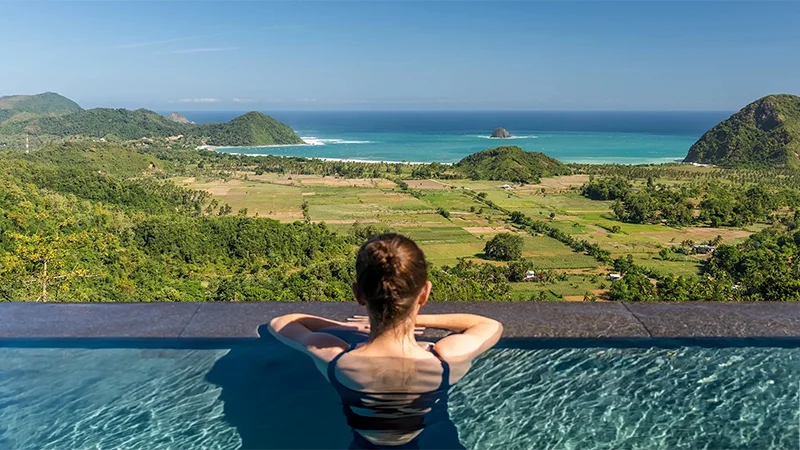
Investing in Selong Belanak: The Definitive 2026 Guide
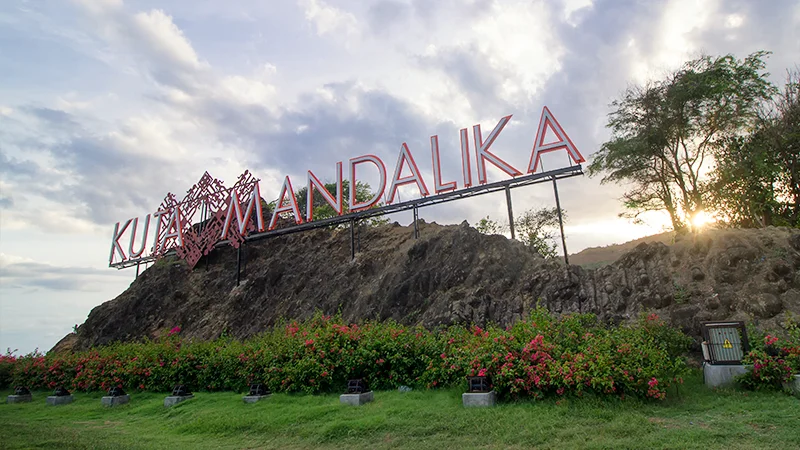
Mandalika & Lombok’s Infrastructure Boom: What It Means for Property Investors
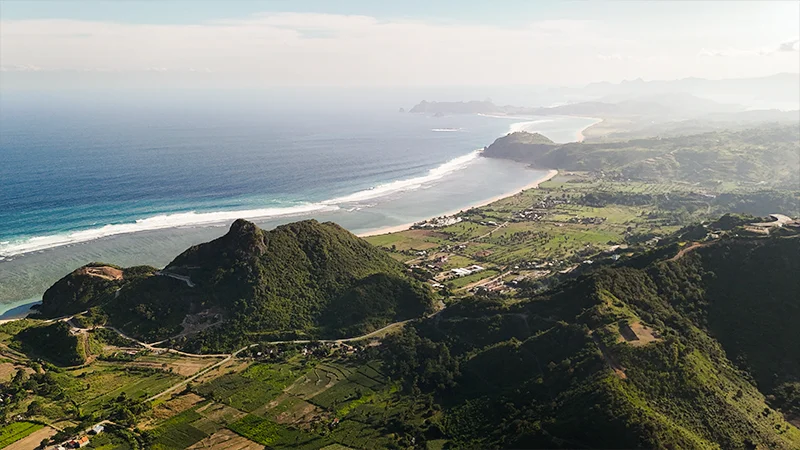
Why Invest in Indonesia? The Complete Case for Property Investors in 2026

Curating exceptional ownership opportunities across South Lombok, from turnkey villas to premium ocean-view land investments.


